
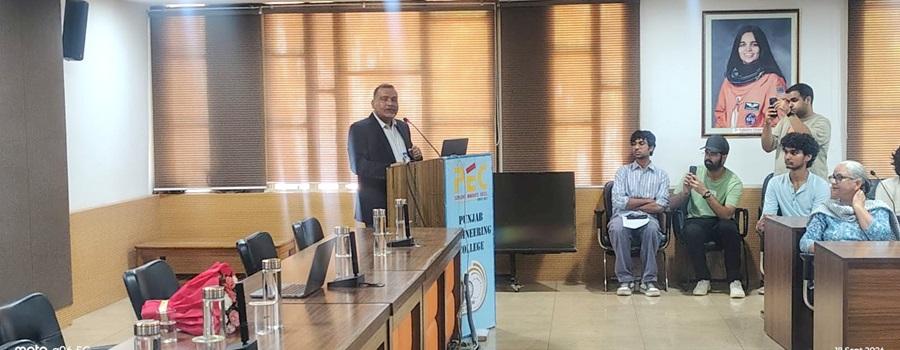
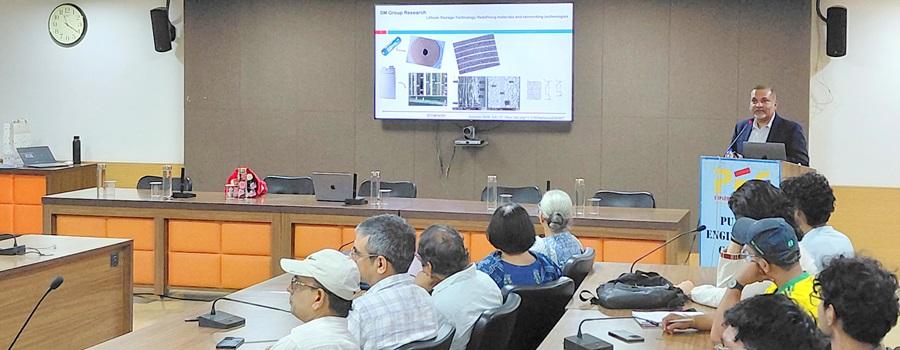
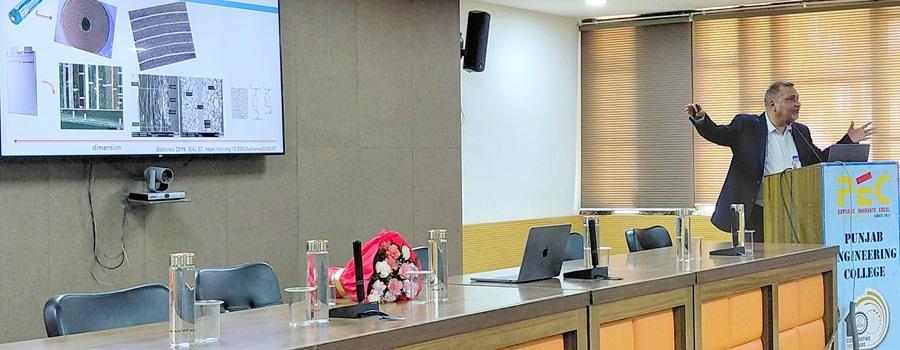
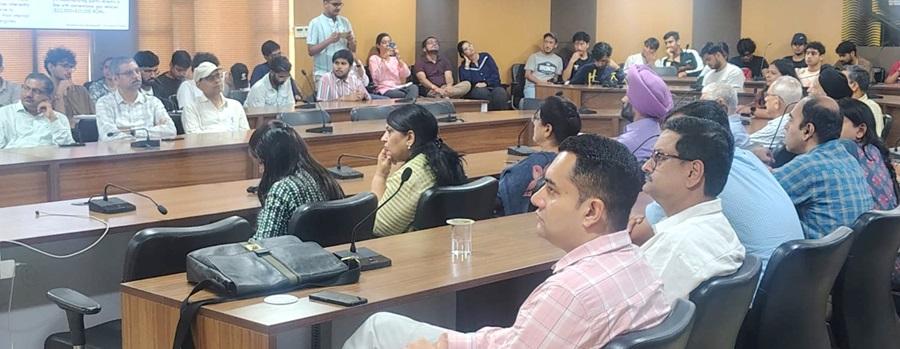
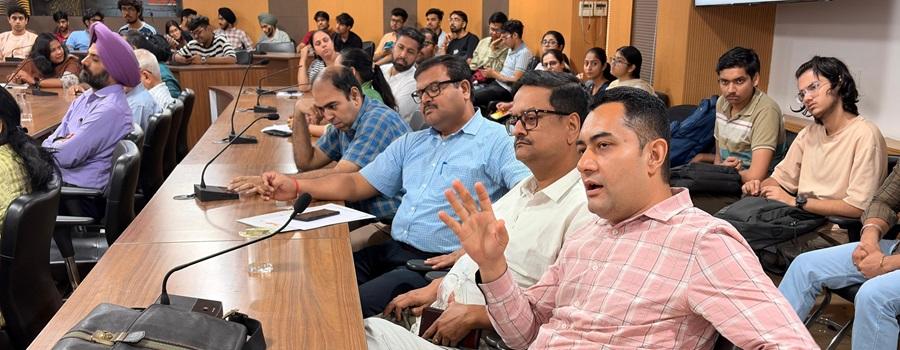
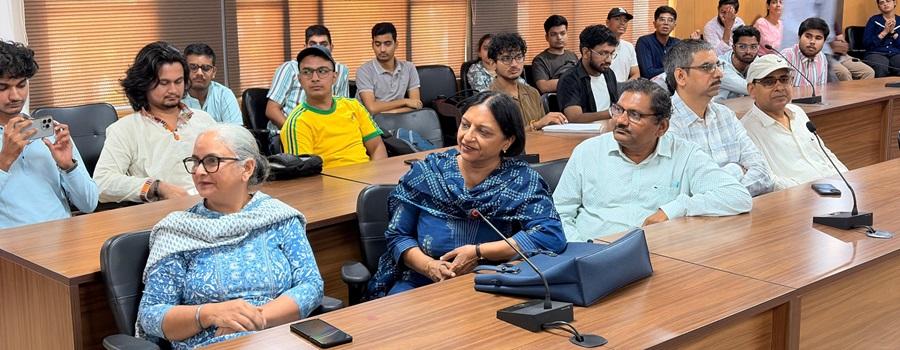
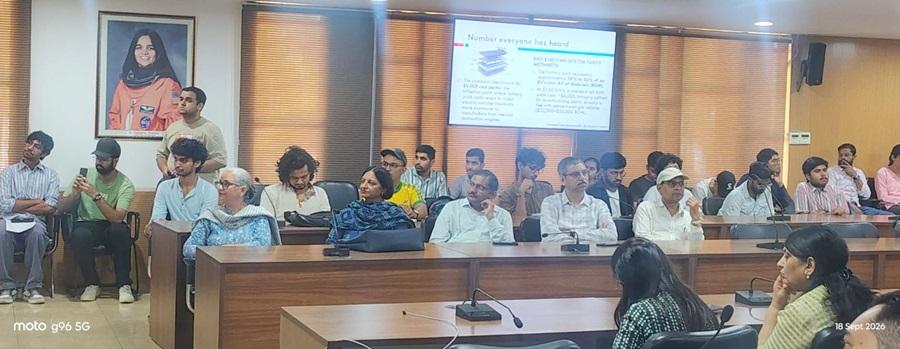
Punjab Engineering College (Deemed to be University) organised the 9th Memorial Lecture in memory of Dr. J. K. Arora, hosted by the Department of Electrical Engineering. The event brought together students, faculty members and academicians from leading institutions for an engaging discussion on emerging battery technologies, energy storage, electric mobility and the opportunities emerging in this rapidly developing sector.
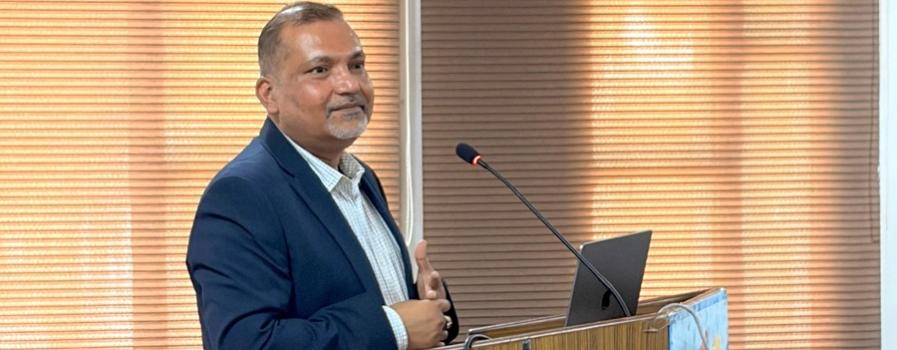
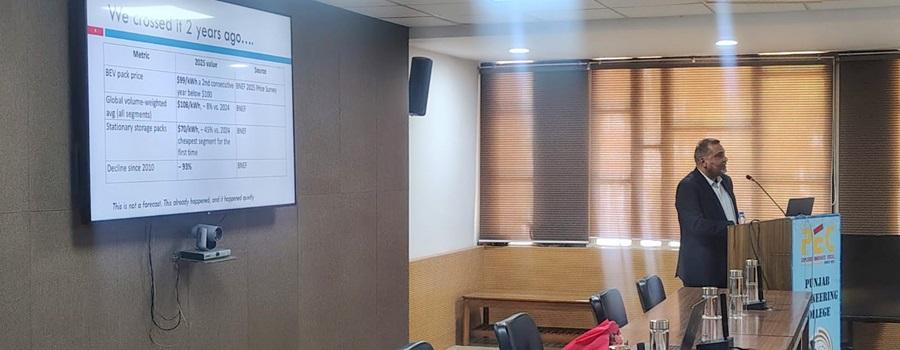
The memorial lecture was delivered by Dr. Sagar Mitra, Professor, Department of Energy Science & Engineering, IIT Bombay, on the theme “The $100/kWh Tipping Point: How Batteries Can Rewrite the Global & Indian Economy.” The lecture examined the evolution of battery technologies and their potential implications for the global and Indian economy.
A major focus of the session was the development of sodium-ion batteries and their comparison with conventional lithium-ion batteries. Dr. Mitra discussed the advantages and challenges associated with both technologies, particularly in terms of material availability, cost and energy density. He highlighted that sodium is abundant and can be sourced from sodium chloride, while lithium faces greater resource and supply-chain constraints. The session also touched upon the technical advantages of using aluminium current collectors in sodium-ion batteries, as opposed to the copper collectors used in lithium-ion battery systems.
The speaker also elaborated on the role of Battery Management Systems (BMS) and Thermal Management Systems (TMS) in modern battery packs. The discussion covered the importance of monitoring parameters such as voltage, current and temperature to ensure battery safety, performance and longevity. The lecture further explored the economics of battery technologies and the projected decline in battery costs, with figures of approximately $105/kWh in 2026 and $69/kWh by 2030 discussed during the session.
The interactive session saw students and faculty raise questions regarding the long-term safety, environmental impact and potential hazards associated with lithium and sodium-based battery technologies. Dr. Mitra addressed these concerns, providing technical insights into battery chemistry, materials and the considerations involved in developing sustainable and safe energy-storage technologies.
An important aspect of the lecture was its emphasis on entrepreneurship and innovation in the battery industry. Dr. Mitra highlighted the growing opportunities for startups across the battery and energy-storage ecosystem and encouraged students to consider research, innovation and entrepreneurship in this thrust area. The discussion underlined the potential for young engineers to contribute to India’s emerging energy and electric-mobility landscape.
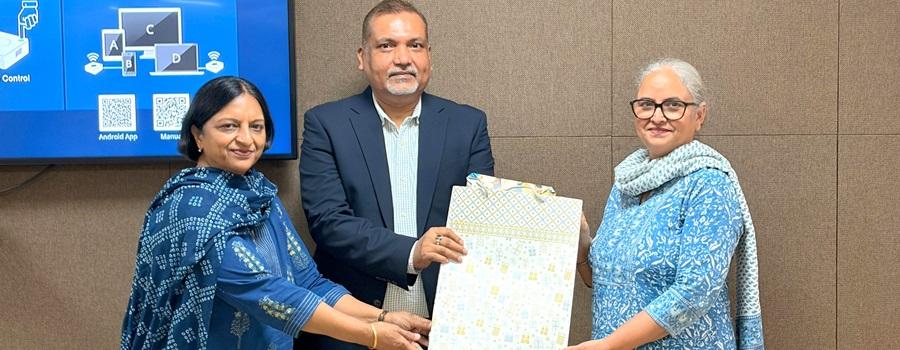
Prof. Uma Batra, Senior Professor and Dean Faculty Affairs, PEC felicitated the guest speaker, Dr. Sagar Mitra, in recognition of his valuable contributions to the academic discourse. She also expressed her gratitude for enlightening the audience and providing an enriching experience with his expertise in the area of battery technology.
The event was graced by Prof. Ajit Kembhavi, an Indian astrophysicist, and a professor emeritus at the Inter-University Centre for Astronomy and Astrophysics, Pune, Prof. Arun K. Grover, former Vice-Chancellor, Panjab University, Chandigarh, senior faculty members from IISER, Mohali, Dr. A. Roy Choudhury, Dr. K.P Singh, Prof. Rajat Sandhir from Panjab University, Chandigarh, Deans, faculty members, research scholars and a large number of students from PEC.
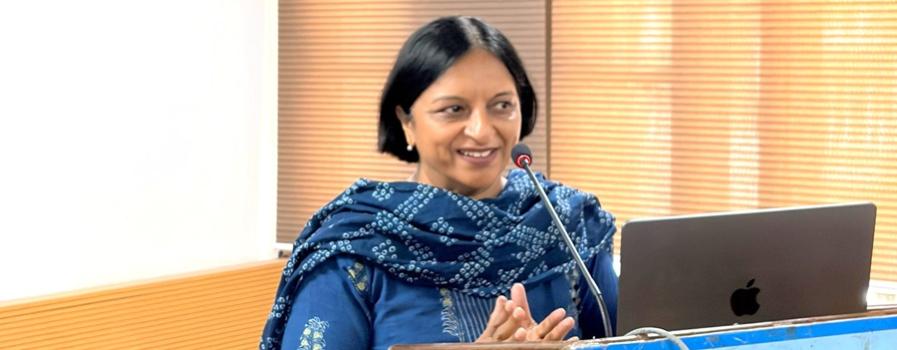
The event concluded with a vote of thanks by Prof. Sandeep Kaur, Head of the Electrical Engineering Department, PEC, thanking the speaker, the academicians, researchers and all the participants for the meaningful exchange on the emerging, thrust areas of battery technology.