
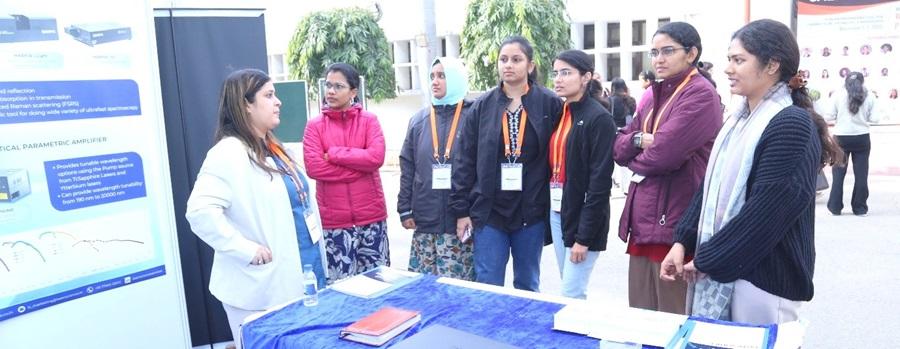
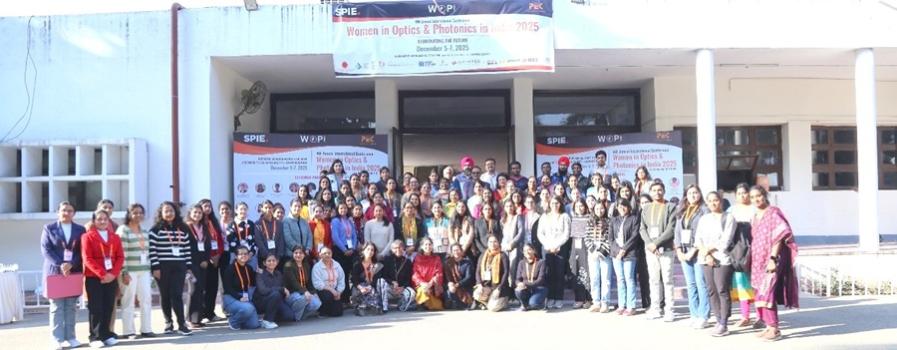
The second day of the Women in Optics and Photonics in India (WOPI 2025) conference at Punjab Engineering College started with cutting-edge research, inspiring talks, and vibrant discussions, drawing over 300 participants from academia and industry.
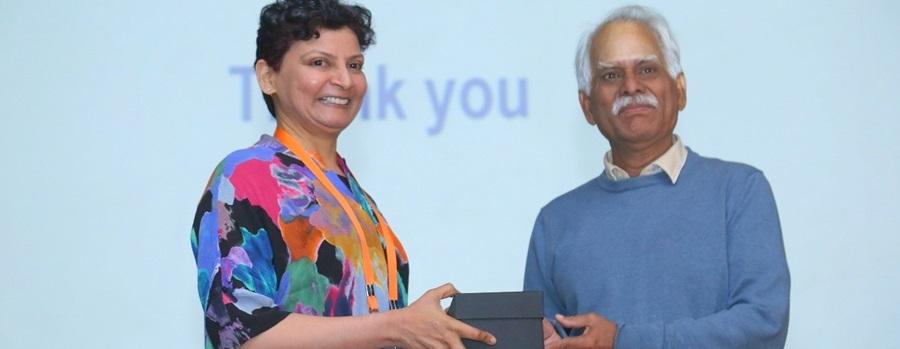
The day opened with a plenary talk by Dr. Sudha Mokkapati from Monash University, Australia, on novel 2D materials and their applications in optics.
Session I – Integrated and On-Chip Optics featured technical presentations that explored heterogeneous silicon photonics for next-generation optical communication and the scaling of computing with silicon photonic interconnects by Dr. Ridhi Nandi from Mix Technologies, Bangalore.
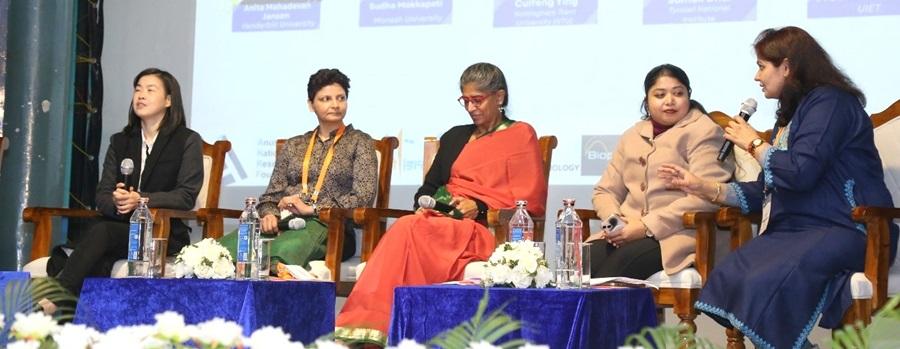
Followed by this, a panel discussion was held that examined paradigm shifts in AI-driven research and its impact on photonics innovation. Panellists discussed emerging opportunities in data-driven modeling, machine learning-based photonic device optimization, and AI-assisted fabrication techniques. The discussion also highlighted the importance of interdisciplinary collaboration and ethical AI practices to ensure responsible technological advancement.
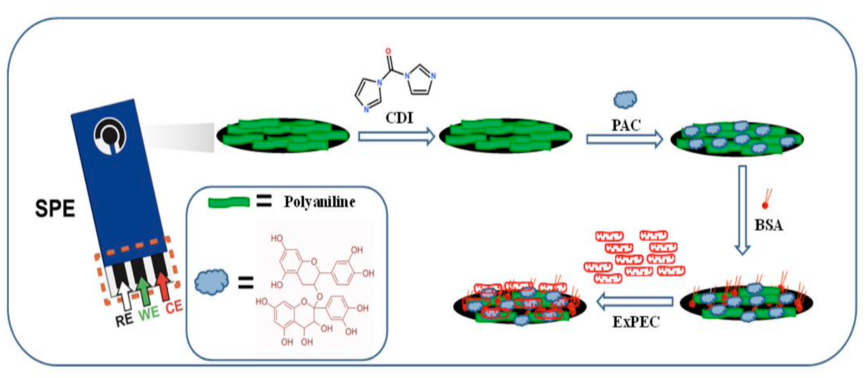
After lunch, Session III – Biophotonics & Sensors showcased discussions on photonics applications ranging from cellular studies to advanced sensing systems by Prof. Anita Mahadevan Jansen from Vanderbilt University, USA, and another presentation on photonics solutions for diverse fields including medical and defence sectors by Ms Ria Paul, Senior Photonics Designer, Syncthreads Computing Solutions Pune.
A panel discussion on “Partners that Support Women in Science” highlighted the vital role of collaborations and institutional initiatives in enhancing female participation in STEM. The session showcased successful models of mentorship, industry–academia partnerships, and policy support that empower women researchers and innovators. Panellists with different backgrounds such as Academia, Research Organisation, Industry etc. emphasized the importance of sustained engagement, visibility, and resource networks to create inclusive ecosystems that nurture women’s growth in science and technology.
The evening Session IV – The Optical Instrumentation session featured a technical talk on engineering optics for next-generation imaging, emphasizing advances in precision wavelength management and innovative design methodologies. The speaker Dr. Neha Khatri, Sr. Principal Scientist CSIO-CSIR, discussed emerging trends in high-resolution imaging systems, highlighting the integration of adaptive optics and novel materials for enhanced performance in scientific and industrial applications.
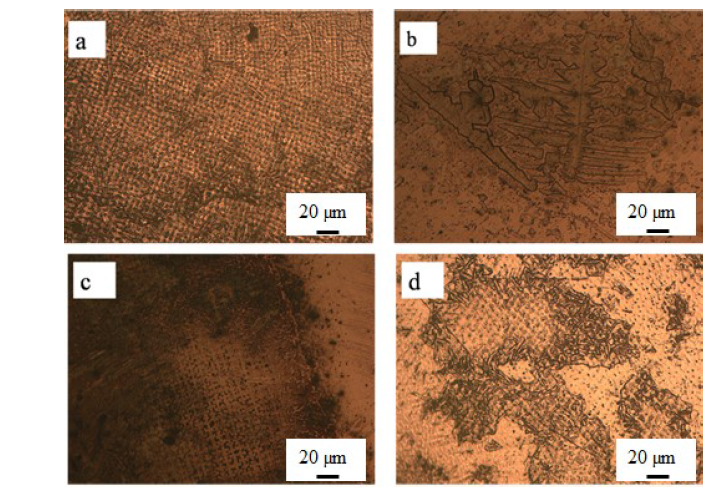
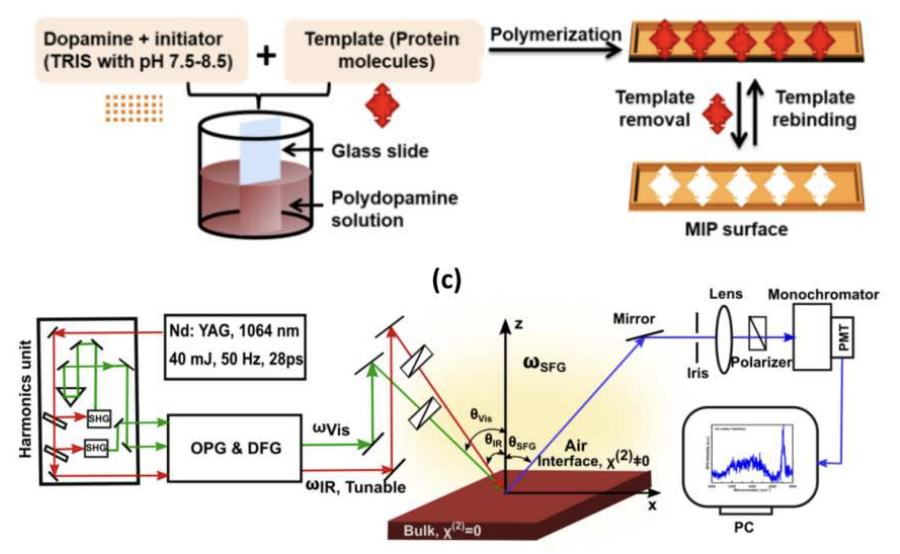
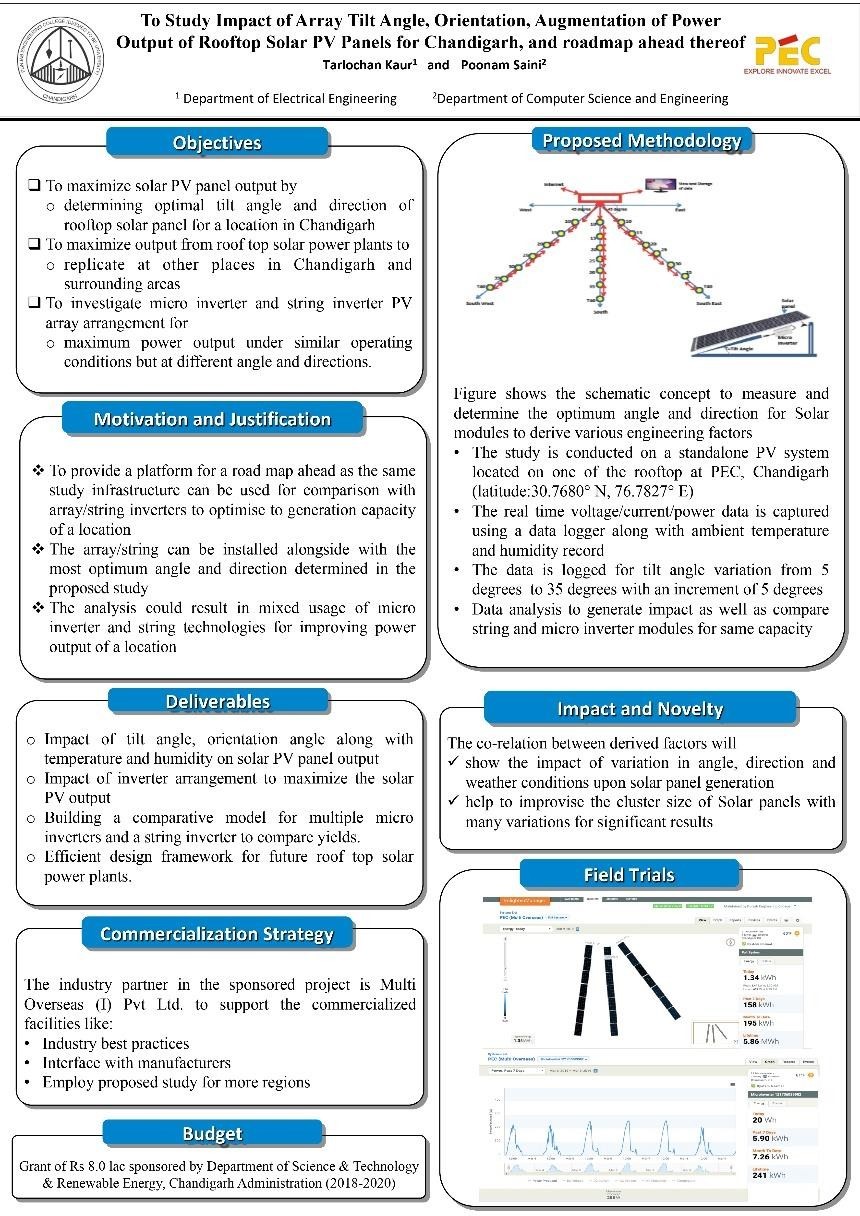
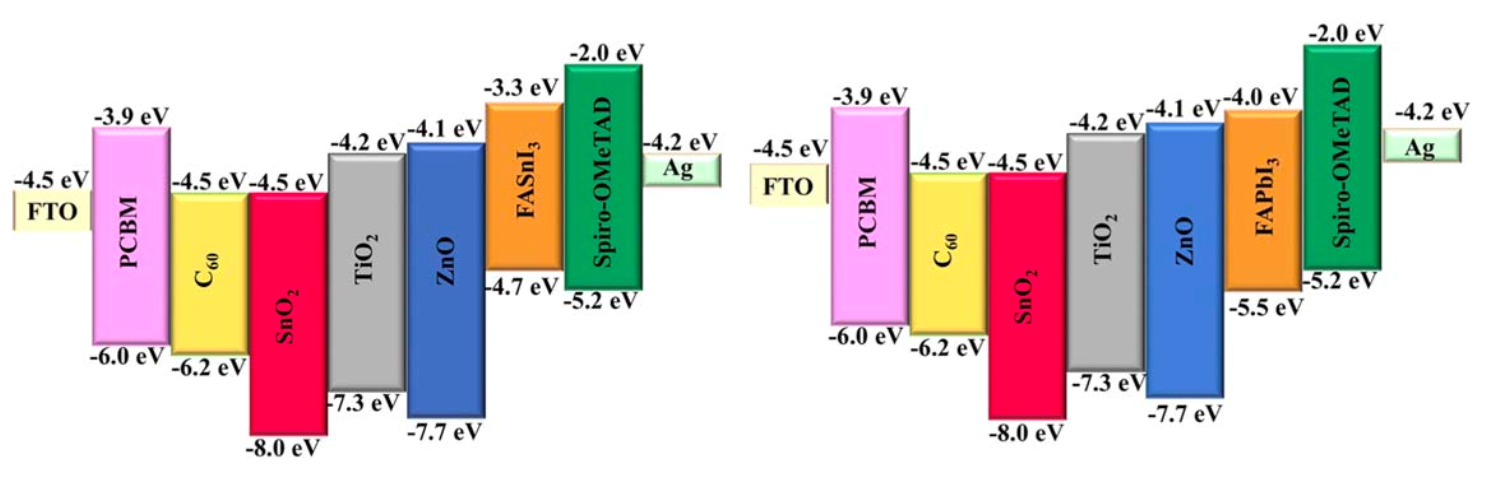
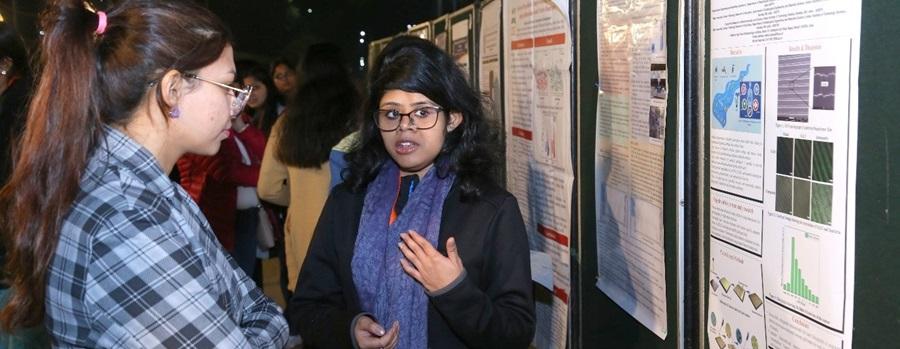
The day concluded with a poster presentation session featuring research across diverse categories of optics and photonics. Participants showcased innovative studies, experimental advancements, and emerging applications, fostering meaningful discussions and knowledge exchange among researchers and experts.
Organising Secretaries Dr. Jyoti Kedia and Dr. Divya Dhawan remarked, “WOPI 2025’s second day showcased the perfect blend of AI, photonics, and leadership, inspiring women scientists to push boundaries and fostering impactful research in optics.”